
What to Eat and Drink on a Long Bike Ride: A Cyclist’s Fuelling Guide
What should you eat and drink on a long bike ride? Here’s how to fuel before, during and after longer rides without overcomplicating it.
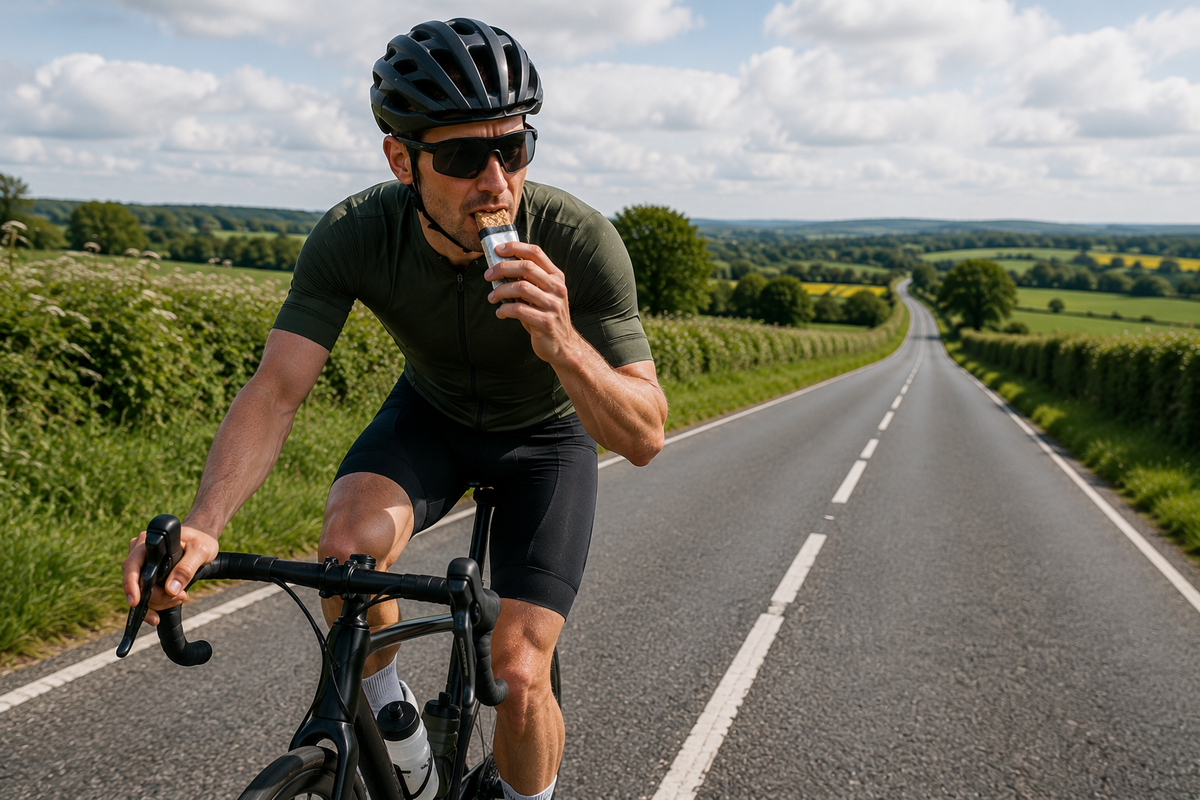
There is a point on a long ride where everything can change surprisingly quickly.
One minute you're rolling along comfortably. The next, the legs feel empty, every gradient looks steeper and the rider who was chatting beside you suddenly seems to be disappearing up the road.
Sometimes the problem is fitness or pacing.
Quite often, you've simply run out of fuel.
For rides lasting several hours, eating and drinking on the bike isn't something to think about only when you become hungry or thirsty. A good fuelling strategy starts before the ride and continues little and often from early on.
The good news is that it doesn't need to be complicated.
You don't need pockets full of expensive sports nutrition. You don't need to calculate every calorie. And you definitely don't need to survive exclusively on energy gels.
You need enough carbohydrate to support the work you're doing, enough fluid for the conditions, and food and drink that your stomach is comfortable processing while you ride.
The short answer: how much should you eat and drink?
For a longer ride, a useful starting point is:
- 30 to 60 g of carbohydrate per hour for many recreational endurance rides
- Potentially up to around 90 g per hour during very long or harder events, if you've trained your gut to tolerate it and use suitable carbohydrate sources
- Roughly 500 to 1,000 ml of fluid per hour, adjusted for temperature, intensity, rider size and individual sweat rate
- Eat and drink little and often, rather than waiting until you're hungry or thirsty
British Cycling advises riders on longer sessions to consume carbohydrate regularly and gives a broad fluid range of around 500 to 1,000 ml per hour depending on conditions and the individual. Sports-nutrition research similarly supports carbohydrate intakes around 30 to 60 g per hour for prolonged exercise, with higher intakes around 90 g per hour used for very long endurance exercise.
Those numbers are useful.
They are not commandments.
A relaxed two-hour café ride in cool weather does not require the same fuelling strategy as six hours of hard riding in summer.
The aim is to match your intake to the ride.
Why cyclists need carbohydrate on long rides
Your body can generate energy from both fat and carbohydrate.
The problem is that your stores of carbohydrate, largely held as glycogen in the muscles and liver, are limited.
As the intensity increases, carbohydrate becomes increasingly important because it can supply energy more rapidly than fat.
That is why a rider can feel perfectly capable for the first couple of hours and then seemingly fall apart.
Cyclists call it bonking, hitting the wall or simply running out of legs.
Whatever you call it, the experience is memorable.
Regular carbohydrate intake helps preserve the fuel available to your working muscles and maintain your ability to keep producing power as the ride goes on.
Research into endurance nutrition has traditionally recommended around 30 to 60 g of carbohydrate per hour for prolonged exercise. For ultra-endurance efforts, intakes around 90 g per hour can be beneficial, generally using mixtures of carbohydrate that can be absorbed through different intestinal transport pathways.
For most normal long rides, however, you don't need to begin at 90 g an hour.
Start with something you can reliably eat and tolerate.
When should you start eating?
Earlier than most people think.
One of the classic mistakes is riding for two hours without eating because you still feel good.
By the time hunger arrives, you're often trying to correct a deficit you've already created.
British Cycling recommends beginning carbohydrate intake early and spreading it across small, frequent feeds rather than consuming large amounts occasionally.
For a long ride, a simple routine is:
Start eating within the first 30 to 45 minutes, then have something every 20 to 30 minutes.
That doesn't mean eating a full bar every half hour.
It could be half a bar, part of a banana, a small piece of malt loaf or a few mouthfuls of carbohydrate drink.
Think of fuelling as a steady drip rather than three enormous meals.
Do you need to eat on every bike ride?
No.
If you're riding gently for an hour and you've eaten normally beforehand, you probably don't need to carry a miniature buffet.
British Cycling's guidance suggests that shorter sessions generally don't require additional fuel, while rides beyond roughly 90 minutes are where planned carbohydrate intake becomes increasingly relevant.
A practical way to think about it is:
Under 60 minutes
For most easy or moderate rides, water and your normal meals are enough.
If you're doing a very hard session, carbohydrate can still be useful, but that's a performance question rather than a requirement for simply completing the ride.
60 to 90 minutes
You may not need food on an easy ride, but carrying something small is sensible.
If the ride is hard, hilly or part of a bigger training day, some carbohydrate can help.
90 minutes to 3 hours
Start fuelling deliberately.
Around 30 to 60 g of carbohydrate per hour is a useful range for many riders.
3 hours and beyond
Consistency becomes increasingly important.
The longer the ride, the more costly an hour of forgotten fuelling can become.
This is where you may move towards the higher end of your carbohydrate range, particularly if the pace is high.
What should you eat before a long ride?
You don't need a heroic plate of pasta at midnight.
You do need to begin the ride with your carbohydrate stores reasonably well stocked.
For a morning long ride, breakfast might include:
- Porridge with banana and honey
- Toast with jam
- Cereal with milk or yoghurt
- Bagel with peanut butter and banana
- Rice pudding and fruit
- Toast plus a small bowl of porridge
British Cycling recommends eating breakfast roughly 90 to 120 minutes before a long ride, although some riders may prefer a slightly shorter or longer interval depending on digestion and the intensity expected early in the ride.
The closer you are to departure, the simpler the food should generally become.
A huge, fatty, high-fibre breakfast immediately before a hard ride may spend the opening hour reminding you that it exists.
Use foods you already know work for you.
What are the best foods to eat while cycling?
Whatever gives you carbohydrate, fits conveniently on the bike and agrees with your stomach.
That leaves far more options than the sports-nutrition aisle might suggest.
Bananas
Cheap, widely available and easy to digest for many riders.
They aren't particularly pocket-friendly after several hours on a hot day, but they're hard to beat early in a ride.
Malt loaf
Almost suspiciously good cycling food.
It's carbohydrate-dense, easy to cut into small portions and generally easy to chew.
Jam or honey sandwiches
Simple white bread with jam or honey is extremely effective ride food.
For longer rides, small sandwiches are easier to manage than full-size ones.
Rice cakes
Homemade cycling rice cakes are popular because they can be made sweet or savoury and provide easily consumed carbohydrate without being aggressively sugary.
Flapjacks and cereal bars
Convenient and energy-dense.
Just be aware that bars containing lots of fat, nuts or fibre may be harder to digest when you're riding hard.
Dried fruit
Dates, raisins and similar dried fruits contain plenty of carbohydrate in a small package.
They can work brilliantly, although large quantities may not suit everyone's digestive system.
Sweets
Sometimes uncomplicated sugar is exactly what you need.
Jelly babies, soft sweets and similar foods can be a perfectly workable source of fast carbohydrate.
They're effectively sports nutrition without the sports branding.
Energy bars
Designed for the job and usually easy to carry.
Check the actual carbohydrate content rather than assuming one bar equals one hour of fuel.
Energy gels
Compact, convenient and particularly useful when you're riding hard enough that chewing becomes annoying.
They are a tool, not an obligation.
British Cycling's own advice suggests using more easily tolerated real food during lower-intensity endurance riding and reserving gels or drinks for periods when faster, easier-to-consume carbohydrate is useful.
Do cyclists actually need energy gels?
No.
You can complete very long rides without consuming a single gel.
What gels do extremely well is deliver a measured quantity of carbohydrate quickly, with almost no chewing and very little bulk.
That becomes useful:
- During a hard climb
- Late in a ride
- During races or fast sportives
- When solid food becomes unappealing
- When you've fallen slightly behind your fuelling plan
Their weakness is that eating six or eight of them can become unpleasant.
Taste fatigue is real.
A good long-ride strategy often mixes normal food, bars, drink and occasional gels rather than relying completely on any one format.
What does 60 g of carbohydrate actually look like?
This is where cycling nutrition becomes much easier to understand.
You don't need to count every gram during the ride, but knowing roughly what your food contains is useful.
For example, an hour's intake might be something like:
- One banana plus a carbohydrate drink
- A bar and part of a bottle of sports drink
- A jam sandwich cut into two small portions
- Two gels
- Malt loaf plus a few sweets
- A homemade rice cake plus carbohydrate drink
British Cycling gives examples such as gels, fig rolls, malt loaf, rice cakes and carbohydrate drinks as practical ways of reaching a 30 to 60 g hourly carbohydrate target.
Check the packaging of whatever you actually carry.
Products vary enormously.
What should you drink on a long ride?
For most cyclists, the answer is some combination of:
Water, electrolyte drink and carbohydrate drink.
How much depends heavily on the conditions.
A small rider rolling through Sussex in 8°C drizzle may have completely different requirements from a larger rider climbing in 30°C heat.
British Cycling commonly cites approximately 500 to 1,000 ml per hour for long rides, with sweat rate, temperature and exercise intensity all affecting individual requirements.
You shouldn't treat one litre per hour as a challenge to complete regardless of circumstances.
You also shouldn't ignore drinking for three hours because the weather feels cool.
The best plan is to understand your own sweat rate and adjust.
How do you estimate your sweat rate?
You can do a basic sweat test at home.
Weigh yourself before a one-hour ride, ideally with minimal clothing.
Ride at a representative intensity.
Keep track of exactly how much you drink.
Afterwards, dry yourself and weigh again.
A simplified calculation is:
Weight lost in kg + fluid consumed in litres = approximate sweat loss in litres
For example:
Start weight: 75.0 kg
Finish weight: 74.5 kg
Fluid consumed: 0.5 litres
Approximate sweat loss:
0.5 + 0.5 = 1.0 litre per hour
You don't necessarily need to replace every millilitre during the ride, but this gives you a much better starting point than copying somebody else's bottle strategy.
British Cycling similarly recommends sweat testing to estimate individual fluid losses.
Repeat the test in different temperatures and conditions and you'll begin to understand your own range.
Do you need electrolytes?
On longer rides, particularly when you're sweating heavily, they can be useful.
Sweat isn't just water.
It also contains electrolytes, most notably sodium.
Electrolyte drinks can therefore help replace some of what you're losing while also making fluid more palatable.
For shorter rides in cool conditions, plain water is often perfectly adequate.
For longer rides or hot conditions, British Cycling recommends electrolyte-containing fluids.
Exactly how much sodium an individual needs varies considerably because sweat sodium concentration differs between riders.
Heavy, salty sweaters may need substantially more than somebody who sweats relatively little.
White salt marks on dark kit after a hot ride can be one clue that you're losing significant amounts.
Can you drink too much water?
Yes.
More isn't always better.
Excessive drinking during prolonged exercise can dilute blood sodium levels and contribute to exercise-associated hyponatraemia, which can be dangerous.
The goal is sensible hydration, not drinking as much as physically possible.
Research into endurance hydration has long recognised that overdrinking can cause problems, particularly when large amounts of plain fluid are consumed relative to sweat losses.
Use your thirst, experience, conditions and sweat rate together.
If you're finishing every long ride several kilograms heavier than when you started, something is wrong.
Water or carbohydrate drink?
Both can work.
Carbohydrate drink has a useful advantage on long rides because it solves two problems simultaneously.
You're drinking and fuelling.
A typical sports drink can supply a meaningful proportion of your hourly carbohydrate target, which means less food needs to be carried in your pockets.
British Cycling notes that 500 ml of a typical carbohydrate sports drink can contribute around 30 to 36 g of carbohydrate, depending on its concentration.
One useful setup for a long ride is:
Bottle 1: water or electrolyte drink
Bottle 2: carbohydrate drink
That gives you flexibility.
Just remember that if your drink contains calories, those carbohydrates count towards the food you're eating.
The café-stop problem
Long bike rides and cafés belong together.
There is absolutely nothing wrong with stopping for coffee and cake.
The mistake is treating the café as your entire fuelling strategy.
Imagine a four-hour ride with a café at the halfway point.
If you eat nothing for two hours, consume an enormous piece of cake and then ride for another two hours without eating, your carbohydrate intake has been delivered in one large digestive challenge instead of a steady supply.
Eat before the café.
Enjoy the café.
Then carry on eating afterwards.
A café stop should complement your fuelling, not replace it.
What about coffee?
If you normally drink coffee, there is no particular reason to avoid it before or during a long ride.
Caffeine can improve endurance performance, but you don't need to turn every ride into a laboratory protocol.
Coffee at breakfast or a café stop is fine for most people who already tolerate caffeine well.
If caffeine makes you anxious, affects your stomach or ruins your sleep after afternoon rides, adjust accordingly.
And don't assume that coffee magically replaces your bottles.
You still need a sensible hydration plan.
Eat more when you're riding harder
A long easy endurance ride and a four-hour race may cover a similar distance but place very different demands on your body.
The harder you ride, the greater your reliance on carbohydrate.
That means you should generally move towards the higher end of your fuelling range as intensity rises.
There's a catch.
Hard riding can also make digestion more difficult.
British Cycling notes that pacing and nutrition are closely linked and that excessive intensity can compromise your ability to tolerate food.
This is another reason to fuel early.
Waiting until the hardest part of the ride to suddenly eat everything in your pockets rarely ends well.
Train your stomach as well as your legs
Fuelling is trainable.
If your longest normal ride is 90 minutes and you suddenly attempt to consume 90 g of carbohydrate every hour during an eight-hour event, your digestive system may object.
Use training rides to experiment.
Find out:
- Which bars are easy to chew
- Which drinks become unpleasant after several bottles
- Whether gels upset your stomach
- How much solid food you tolerate
- Which foods still seem appealing after four hours
- How much carbohydrate you can consistently consume
British Cycling explicitly recommends practising nutrition in training and avoiding unfamiliar products on event day.
The best fuelling strategy isn't the theoretical one.
It's the one you can actually follow.
Don't forget taste fatigue
This becomes surprisingly important on very long rides.
After several hours, another sticky sweet bar can feel almost impossible to eat.
Mix flavours and textures.
Take some sweet foods and something savoury.
Alternate liquid carbohydrate with solid food.
On genuinely long rides, foods such as small sandwiches, salted potatoes, rice cakes or savoury wraps can become far more appealing than another vanilla-flavoured gel.
If you enjoy what you're carrying, you're more likely to eat it.
A simple three-hour ride example
You don't need to follow this exact plan, but it shows how straightforward long-ride fuelling can be.
Before
Breakfast around 90 minutes before leaving:
Porridge, banana and honey, plus your normal drink.
Hour 1
Half a banana
Half an energy bar
Regular sips of fluid
Hour 2
Rest of the bar
Part of a carbohydrate drink
Small piece of malt loaf
Hour 3
Small sandwich or another bar
A few sweets or gel towards the end if needed
Continue drinking
You might consume somewhere around 40 to 60 g of carbohydrate each hour without ever feeling as though you're constantly eating.
A five-hour ride is different
The longer the ride becomes, the more important logistics become.
Two bottles probably aren't enough.
Neither are two energy bars.
Look at the route beforehand.
Where can you refill bottles?
Is there a shop?
A café?
A petrol station?
A public tap?
Can you carry enough powder or electrolyte tablets to make more drink?
This turns nutrition from a pocket-packing exercise into ride planning.
One of the easiest ways to ruin a long ride is reaching the final third with one mouthful of warm water and half a forgotten cereal bar.
What should you eat after a long ride?
If you're having a normal meal reasonably soon, you don't necessarily need an expensive recovery product.
A proper meal containing carbohydrate, protein and fluid will do the job.
Good examples include:
- Rice, vegetables and tofu
- Pasta with a protein source
- Beans on toast plus yoghurt
- Jacket potato and cottage cheese
- Burrito bowl with rice, beans and vegetables
- Cereal, milk or yoghurt and fruit if you need something quickly
After particularly long or hard rides, carbohydrate helps replenish glycogen while protein supports muscle repair.
If a proper meal is going to be delayed, a convenient recovery snack can bridge the gap.
British Cycling similarly notes that riders who are eating normally soon after training generally don't need a special recovery drink.
The mistakes that ruin long rides
Most fuelling failures are remarkably predictable.
Waiting until you're hungry
By then you're already playing catch-up.
Forgetting to drink when it's cold
Cool weather reduces the urge to drink but doesn't stop fluid loss.
Eating everything at once
Your digestive system generally copes better with smaller, regular amounts.
Trying unfamiliar nutrition at an event
The sportive feed station is not an ideal place to discover that a particular gel disagrees with you.
Carrying food you don't actually like
You won't suddenly develop a passion for an unpleasant energy bar at kilometre 120.
Riding too hard early
No amount of perfect nutrition completely compensates for spending the first hour behaving as though the finish is ten miles away.
Relying entirely on gels
They work brilliantly, right up until you never want to see one again.
Forgetting that drinks can contain carbohydrate
If you're taking 50 g an hour from bottles and then eating another 70 g, your stomach may have questions.
The RDE rule: fuel the ride you're actually doing
Cycling nutrition can become unnecessarily complicated.
Professional riders, ultra-distance racers and sports scientists have good reasons to obsess over precise carbohydrate delivery.
Most of us need something simpler.
For a long ride:
Eat before you're hungry.
Drink before you've ignored your bottle for two hours.
Aim for roughly 30 to 60 g of carbohydrate per hour as a sensible starting range.
Increase it when the ride becomes longer or harder, if your stomach tolerates it.
Adjust fluid to the conditions and your own sweat rate.
And practise.
Because the best food in your pocket isn't the one with the cleverest marketing.
It's the one you'll still happily eat when you've been riding for five hours and there are thirty miles left.
Fuel early. Fuel regularly. Then get on with the ride.